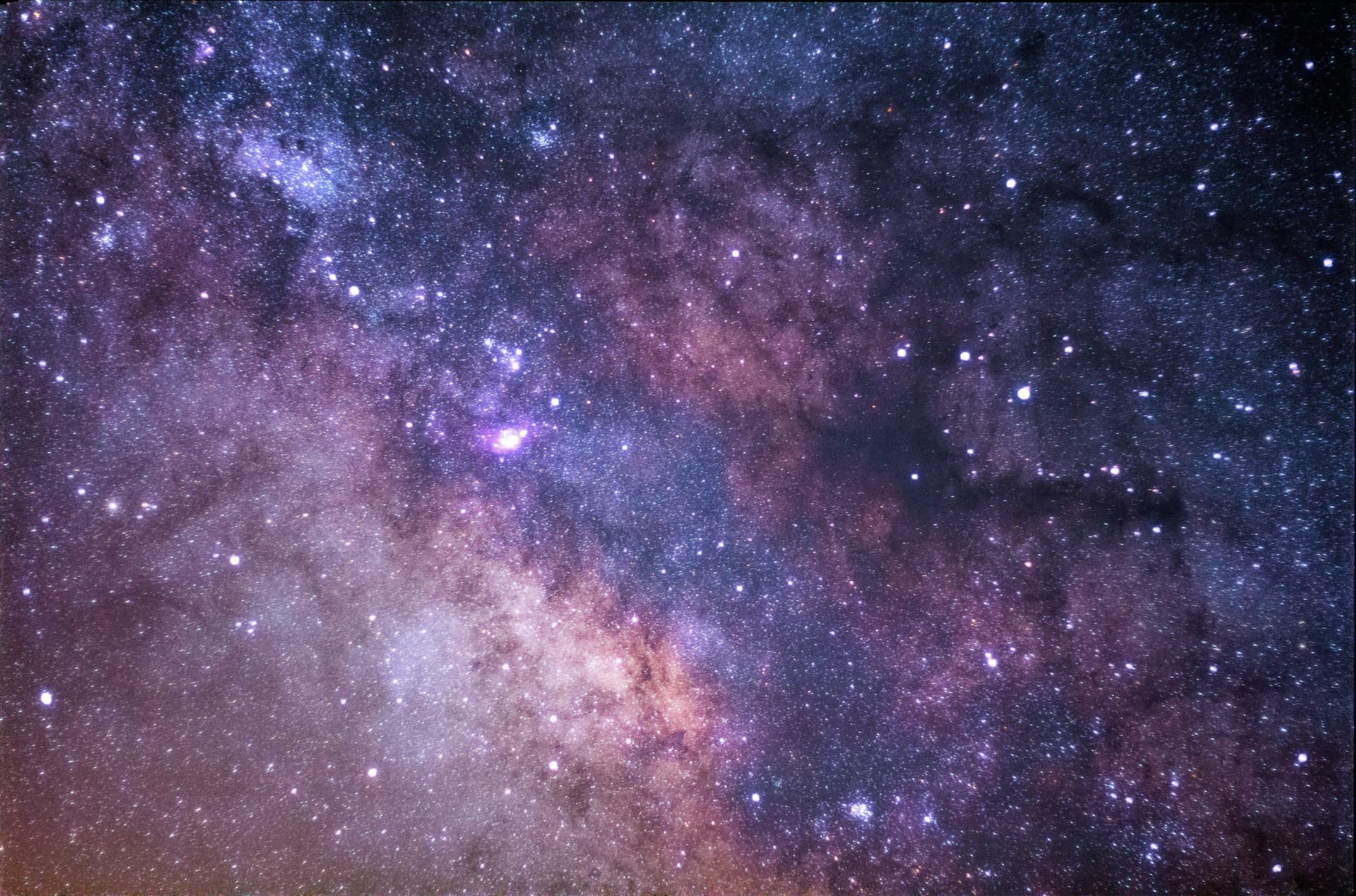
Why star naming doesn't work the way you think
Star naming services have been selling certificates since the 1970s. The pitch is appealing: "Name a star after someone you love." You pay $20–$100, receive a certificate and a star chart, and feel like you've claimed a piece of the cosmos.
The reality is less magical. The International Astronomical Union (IAU) — the only internationally recognized authority for naming celestial objects — has been unambiguous: they do not recognize any commercial star naming service. Period.
The IAU's official statement: "Such 'names' have no formal or official validity whatsoever." The name you paid for exists in one company's private database. No astronomer uses it. No observatory recognizes it. No scientific publication references it. If three different people "name" the same star, all three names exist in their respective company databases, and none of them means anything.
It's a symbolic gesture sold as something more. And for many people, that gap between expectation and reality feels disappointing.
The reality is less magical. The International Astronomical Union (IAU) — the only internationally recognized authority for naming celestial objects — has been unambiguous: they do not recognize any commercial star naming service. Period.
The IAU's official statement: "Such 'names' have no formal or official validity whatsoever." The name you paid for exists in one company's private database. No astronomer uses it. No observatory recognizes it. No scientific publication references it. If three different people "name" the same star, all three names exist in their respective company databases, and none of them means anything.
It's a symbolic gesture sold as something more. And for many people, that gap between expectation and reality feels disappointing.
Cosmic Echo is physically real
When you send a message with Cosmic Echo, a real radio signal is transmitted from a real antenna toward a real star. Your message travels through space at 299,792 km/s. This isn't metaphorical, symbolic, or "in the spirit of" — it's electromagnetic energy propagating through the vacuum of space.
The physics is identical to how NASA communicates with deep space probes. The Voyager 1 spacecraft, launched in 1977, still communicates with Earth via radio from over 24 billion kilometers away. Your message uses the same fundamental science — the only difference is the destination.
This distinction matters: a star naming service creates a database entry. Cosmic Echo creates a physical event in the universe. One is data on a server. The other is energy in space. They cost roughly the same. The difference in what you actually get is enormous.
The physics is identical to how NASA communicates with deep space probes. The Voyager 1 spacecraft, launched in 1977, still communicates with Earth via radio from over 24 billion kilometers away. Your message uses the same fundamental science — the only difference is the destination.
This distinction matters: a star naming service creates a database entry. Cosmic Echo creates a physical event in the universe. One is data on a server. The other is energy in space. They cost roughly the same. The difference in what you actually get is enormous.
Ready to send your own words into the universe? Packages from $29 – printable certificate & live tracker.
Compose your messageCosmic Echo vs. star naming registries — the honest comparison
Here's how Cosmic Echo stacks up against the three biggest star naming services. We've kept this honest and specific. None of these companies' star names are recognized by the International Astronomical Union — that's not an opinion, it's the IAU's official position. The real question isn't which name is more legitimate; it's which option is actually doing something physical in the universe.
| Feature | Cosmic Echo | Star Registry | International Star Registry | Staracle |
|---|---|---|---|---|
| What you actually get | Real radio transmission aimed at a real star | Database entry with a name and a printable certificate | Database entry with a name and a printable certificate | Database entry with a name and a printable certificate |
| IAU-recognized? | N/A — we don't name anything. We transmit. | No. IAU explicitly does not recognize commercial star names. | No. IAU explicitly does not recognize commercial star names. | No. IAU explicitly does not recognize commercial star names. |
| Physics involved | Real electromagnetic radiation propagating through space at the speed of light | None — purely a database operation | None — purely a database operation | None — purely a database operation |
| Cryptographic verification | Yes — SHA-256 hash of your transmission payload, independently verifiable | No — only the company's private database is the source of truth | No — only the company's private database is the source of truth | No — only the company's private database is the source of truth |
| Live tracking after purchase | Yes — Signal Tracker updates every second showing real-time distance from Earth | No — static certificate only | No — static certificate only | No — static certificate only |
| Personal message included | Up to 100 words encoded into the actual transmission | Often available, printed on the certificate (not transmitted anywhere) | Often available, printed on the certificate (not transmitted anywhere) | Sometimes available on the certificate |
| Same star can be 'sold' to multiple people? | We don't sell stars — we transmit to them. Aim is unrestricted. | Other registries have likely already 'named' the same star differently | Other registries have likely already 'named' the same star differently | Other registries have likely already 'named' the same star differently |
| What happens if the company shuts down | Your transmission already happened. The signal keeps traveling regardless. | The 'name' disappears with the database | The 'name' disappears with the database | The 'name' disappears with the database |
| Typical price (entry tier) | $29 | $19–$54 | $54–$199 | $50–$120 |
Comparison based on publicly listed product features and pricing as of 2026. IAU position on commercial star names: “Such ‘names’ have no formal or official validity whatsoever.” Source: IAU
A better certificate
Star naming certificates are printed from a template with your name and star coordinates plugged in. They're generic by necessity — because nothing actually happened. A Cosmic Echo Transmission Certificate documents something that actually occurred:
• Your personal message (exactly as transmitted)
• Sender and recipient names
• Destination star and its distance in light-years
• Transmission date and batch number
• Station name and geographic coordinates
• Signal frequency (radio transmission)
• A unique SHA-256 cryptographic verification hash
The cryptographic hash is particularly significant. It's a mathematical proof that your specific message was included in the transmission payload. It can be independently verified — unlike a star name, which can only be "verified" by checking the company's own private database.
Available as a digital PDF ($29), premium print ($59), or museum-quality framed certificate ($89).
• Your personal message (exactly as transmitted)
• Sender and recipient names
• Destination star and its distance in light-years
• Transmission date and batch number
• Station name and geographic coordinates
• Signal frequency (radio transmission)
• A unique SHA-256 cryptographic verification hash
The cryptographic hash is particularly significant. It's a mathematical proof that your specific message was included in the transmission payload. It can be independently verified — unlike a star name, which can only be "verified" by checking the company's own private database.
Available as a digital PDF ($29), premium print ($59), or museum-quality framed certificate ($89).
Live tracking vs. a static document
A star naming certificate sits in a frame and never changes. It says the same thing the day you buy it as it does ten years later. Nothing evolves, because nothing happened.
Your Cosmic Echo Signal Tracker is alive. It shows your message's current distance from Earth in real-time, updated every second. The numbers grow constantly because your message is constantly moving. Check it in a month and it's millions of kilometers from Earth. Check it in a year and it's one light-year away. Check it in five years and it's past Alpha Centauri.
The tracker is a living artifact. It changes every second. It tells a story that develops over time. It gives you a reason to return, to check, to feel connected to your message as it crosses the galaxy. A star naming certificate gives you none of that.
Your Cosmic Echo Signal Tracker is alive. It shows your message's current distance from Earth in real-time, updated every second. The numbers grow constantly because your message is constantly moving. Check it in a month and it's millions of kilometers from Earth. Check it in a year and it's one light-year away. Check it in five years and it's past Alpha Centauri.
The tracker is a living artifact. It changes every second. It tells a story that develops over time. It gives you a reason to return, to check, to feel connected to your message as it crosses the galaxy. A star naming certificate gives you none of that.
The market for star gifts — and why people are disappointed
Star naming services are a surprisingly large industry — estimated at $10–$50 million annually. They've been around since the 1970s and have sold millions of certificates. They advertise heavily around Valentine's Day, Christmas, and other gift-giving occasions.
The marketing is effective because the concept is genuinely appealing. Who wouldn't want a star named after them? But customer reviews tell a more complicated story. Search "is naming a star real?" or "star naming scam" and you'll find thousands of people who felt misled when they learned the IAU doesn't recognize commercial star names.
The common sentiment: "I wish I'd known it was just symbolic. I would have bought something real instead."
Cosmic Echo was built for exactly that market — people who love the idea of connecting with the stars but want something physically real. Same emotional appeal, same price range, but backed by actual physics.
The marketing is effective because the concept is genuinely appealing. Who wouldn't want a star named after them? But customer reviews tell a more complicated story. Search "is naming a star real?" or "star naming scam" and you'll find thousands of people who felt misled when they learned the IAU doesn't recognize commercial star names.
The common sentiment: "I wish I'd known it was just symbolic. I would have bought something real instead."
Cosmic Echo was built for exactly that market — people who love the idea of connecting with the stars but want something physically real. Same emotional appeal, same price range, but backed by actual physics.
Real science, not marketing
Cosmic Echo's approach is grounded in real radio astronomy:
The frequency is in the radio band selected for interstellar communication. It's the same family of frequencies that SETI researchers monitor when searching for signals from alien civilizations. First identified by Dutch astronomer Hendrik van de Hulst in 1944 and confirmed observationally in 1951.
The propagation follows the inverse-square law of electromagnetic radiation. Radio waves in a vacuum travel at exactly the speed of light (299,792,458 m/s) and propagate indefinitely. This is the same physics that enables every space mission ever launched.
The antenna is a parabolic dish — the same design used by NASA's Deep Space Network, the Allen Telescope Array (SETI), and every major radio observatory in the world. It focuses electromagnetic energy into a directed beam aimed at specific celestial coordinates.
Every claim Cosmic Echo makes is verifiable through basic radio astronomy. We don't need marketing language to make it sound impressive — the physics speaks for itself.
The frequency is in the radio band selected for interstellar communication. It's the same family of frequencies that SETI researchers monitor when searching for signals from alien civilizations. First identified by Dutch astronomer Hendrik van de Hulst in 1944 and confirmed observationally in 1951.
The propagation follows the inverse-square law of electromagnetic radiation. Radio waves in a vacuum travel at exactly the speed of light (299,792,458 m/s) and propagate indefinitely. This is the same physics that enables every space mission ever launched.
The antenna is a parabolic dish — the same design used by NASA's Deep Space Network, the Allen Telescope Array (SETI), and every major radio observatory in the world. It focuses electromagnetic energy into a directed beam aimed at specific celestial coordinates.
Every claim Cosmic Echo makes is verifiable through basic radio astronomy. We don't need marketing language to make it sound impressive — the physics speaks for itself.
Same price, infinitely more real
Most star naming packages cost $20–$100. Cosmic Echo's digital certificate is $29, $59 for printed, $89 for framed.
For the same price as a name in a private database that no one recognizes, you get:
✓ A real radio transmission from a parabolic dish
✓ Your personal message encoded in binary and broadcast toward a real star
✓ A verified Transmission Certificate with cryptographic proof
✓ A live Signal Tracker showing real-time distance from Earth
✓ A signal that travels at the speed of light indefinitely
One is a nice idea. The other is a permanent mark on the physical universe. The choice seems clear.
And honestly? The emotional experience is better too. Checking a live tracker and seeing your message millions of kilometers from Earth — and further every second — creates a visceral, ongoing connection that a static certificate on a wall simply can't match.
For the same price as a name in a private database that no one recognizes, you get:
✓ A real radio transmission from a parabolic dish
✓ Your personal message encoded in binary and broadcast toward a real star
✓ A verified Transmission Certificate with cryptographic proof
✓ A live Signal Tracker showing real-time distance from Earth
✓ A signal that travels at the speed of light indefinitely
One is a nice idea. The other is a permanent mark on the physical universe. The choice seems clear.
And honestly? The emotional experience is better too. Checking a live tracker and seeing your message millions of kilometers from Earth — and further every second — creates a visceral, ongoing connection that a static certificate on a wall simply can't match.
~6 hours
To transmission
Radio signal
Transmission type
299,792 km/s
Signal speed
$29
Digital certificate
Frequently Asked Questions
Everything you need to know
Your words deserve to travel forever
Packages from $29 – printable certificate & live tracker. Your message transmits within hours.
Send Your Message