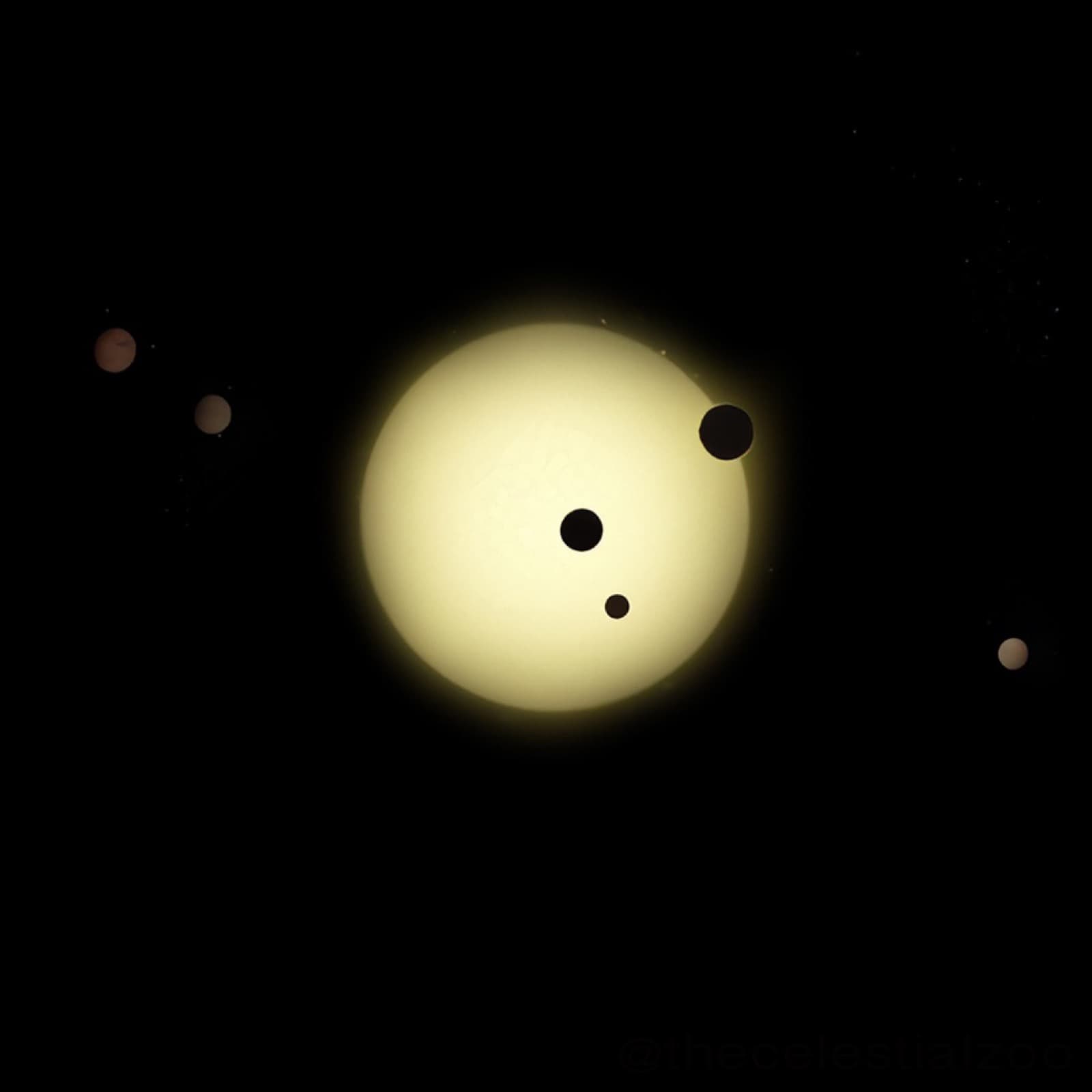
What is Tau Ceti?
Tau Ceti (τ Ceti) is a single G-type star in the constellation Cetus, approximately 11.9 light-years from Earth. It is the closest solitary Sun-like star — not a binary or triple system — which makes it an especially clean target for habitability and SETI studies.
Type: G8.5V — a yellow main-sequence star slightly smaller and cooler than the Sun
Mass: ~0.78 solar masses
Luminosity: ~0.52 solar luminosities
Distance: 11.9 light-years
Constellation: Cetus (the Whale)
Apparent magnitude: 3.5 (visible to the naked eye from dark skies)
Type: G8.5V — a yellow main-sequence star slightly smaller and cooler than the Sun
Mass: ~0.78 solar masses
Luminosity: ~0.52 solar luminosities
Distance: 11.9 light-years
Constellation: Cetus (the Whale)
Apparent magnitude: 3.5 (visible to the naked eye from dark skies)
Why SETI keeps coming back to Tau Ceti
For decades, Tau Ceti has appeared on shortlists of nearby stars worth listening to — and worth imagining a reply from.
It is close. It is Sun-like. It is stable enough, old enough, and solitary enough to make planetary systems plausible. Project Ozma — the first modern SETI experiment, led by Frank Drake in 1960 — targeted Tau Ceti and Epsilon Eridani specifically. That choice was not random: if you had one night of telescope time to listen for others, these were the rational nearby bets.
When you transmit to Tau Ceti through Cosmic Echo, you are aiming along the same scientific logic SETI used from the beginning: nearby, Sun-analog, the classic SETI target. The symbolism and the physics match.
It is close. It is Sun-like. It is stable enough, old enough, and solitary enough to make planetary systems plausible. Project Ozma — the first modern SETI experiment, led by Frank Drake in 1960 — targeted Tau Ceti and Epsilon Eridani specifically. That choice was not random: if you had one night of telescope time to listen for others, these were the rational nearby bets.
When you transmit to Tau Ceti through Cosmic Echo, you are aiming along the same scientific logic SETI used from the beginning: nearby, Sun-analog, the classic SETI target. The symbolism and the physics match.
Ready to send your own words into the universe? Packages from $29 – printable certificate & live tracker.
Compose your messageExoplanets and the debris disk
Tau Ceti hosts a substantial debris disk of cool dust — evidence of rocky material and ongoing collisions in the system. Infrared observations (including Herschel) have mapped that disk and constrained where planets could stably orbit inside its inner edge.
Multiple candidate exoplanets have been proposed around Tau Ceti over the past decade, including super-Earth-mass worlds. Some analyses place candidates near or inside the habitable zone, though confirmation and characterization remain active research. The picture is less settled than TRAPPIST-1's seven confirmed planets — and that honesty matters — but the scientific interest is real.
For a Cosmic Echo message, that uncertainty is part of the romance: you are aiming at one of the nearest Sun-like systems where life has been seriously considered by working astronomers.
Multiple candidate exoplanets have been proposed around Tau Ceti over the past decade, including super-Earth-mass worlds. Some analyses place candidates near or inside the habitable zone, though confirmation and characterization remain active research. The picture is less settled than TRAPPIST-1's seven confirmed planets — and that honesty matters — but the scientific interest is real.
For a Cosmic Echo message, that uncertainty is part of the romance: you are aiming at one of the nearest Sun-like systems where life has been seriously considered by working astronomers.
Tau Ceti in culture and science fiction
Because it is nearby and Sun-like, Tau Ceti has been a favorite destination in science fiction for generations — from early pulp stories to modern novels imagining humanity's first colony under a yellow star that is not our own.
Unlike Sirius (mythic brightness) or Vega (Contact fame), Tau Ceti's cultural weight is quieter and more scientific: the plausible next neighborhood. Sending a message there is less about spectacle and more about intention — a transmission aimed where a Sun-like system might actually host worlds.
Unlike Sirius (mythic brightness) or Vega (Contact fame), Tau Ceti's cultural weight is quieter and more scientific: the plausible next neighborhood. Sending a message there is less about spectacle and more about intention — a transmission aimed where a Sun-like system might actually host worlds.
What the Signal Tracker shows for Tau Ceti
After launch, your Signal Tracker updates every second:
1.3 seconds: Past the Moon
Hours: Past the outer planets
1 year: One light-year from Earth
11.9 years: Arrival at Tau Ceti
Close enough to plan for. Far enough to feel like the stars.
1.3 seconds: Past the Moon
Hours: Past the outer planets
1 year: One light-year from Earth
11.9 years: Arrival at Tau Ceti
Close enough to plan for. Far enough to feel like the stars.
~6 hours
To transmission
Radio signal
Transmission type
299,792 km/s
Signal speed
$29
Digital certificate
Frequently Asked Questions
Everything you need to know
Your words deserve to travel forever
Packages from $29 – printable certificate & live tracker. Your message transmits within hours.
Send Your Message